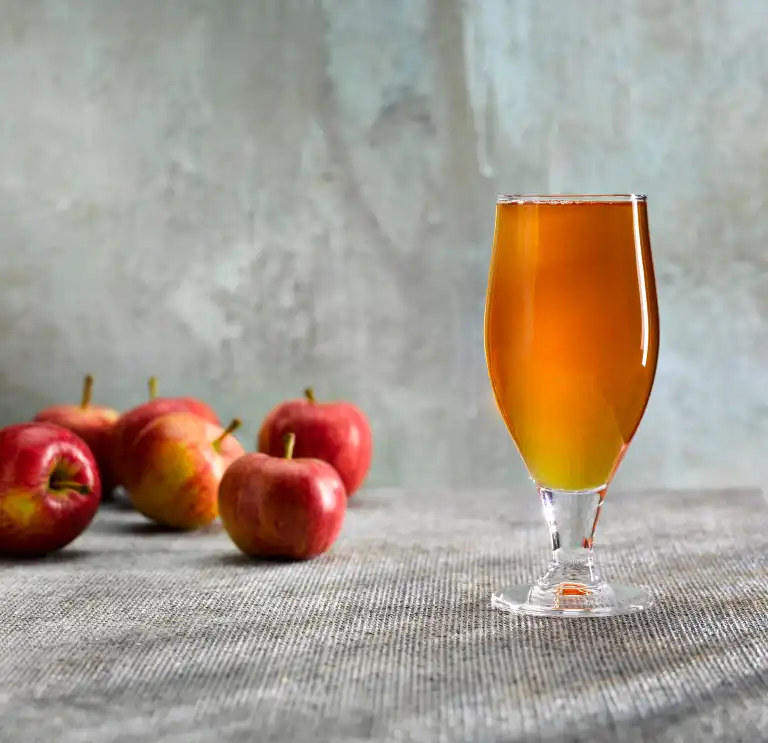
To qualify as ‘Traditional Welsh Cider’, the growing of the cider apples, the production of juice from first press, the fermentation process and bottling or barrelling of the cider must all take place within the defined geographical area. This means that with each sip of this cider, you know exactly where the apples were grown and pressed. However, not every batch (or cuvee) is the same – the variety of the apples used in making the cider impacts its flavour which adds an artisanal quality to this unique product.
As you might guess, tradition forms a fundamental part to the production of this PGI product. The apples either fall or are shaken from trees onto the ground and are collected by hand or machine. They are then left to ripen naturally before arriving at the mill where they are washed and milled to a pulp. A scratter chops up the whole fruit into a pulp form, which is then pressed to extract the juice. The end product is a naturally unpasteurised ‘live’ product. The purity of this product is protected as the addition of fruit concentrate, sugars, sweeteners, colour and artificial carbonation amongst other elements is not permitted.
This incredibly natural, traditional drink does not just form a part of historic farming tales – it is a living element of Welsh agriculture. There is a cider-making revival in Wales, boosted by its artisanal qualities and natural processing methods.