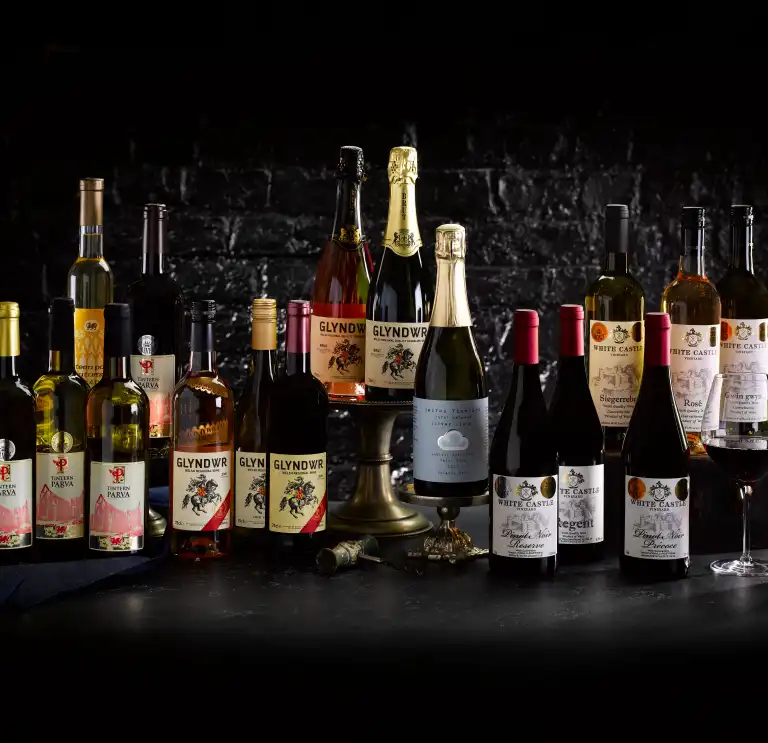
The Welsh wine industry is blossoming and rapidly expanding with a multitude of vineyards located throughout Wales. There are over 20 different grape varieties grown in Wales, producing Red, White and Rosé wine, which can either be still or sparkling.
The characteristics of the Welsh landscape produce wine with a crisp acidity. All Welsh vineyards are positioned at above 49.9 degrees north leading to long daylight hours in the growing season. The northerly latitude of the vineyards creates the long growing season and long daylight hours that are key to the development of strong aromatic flavours. It permits the use of a broad range of grape varieties whilst maintaining the fundamental characteristics that arise from Wales’s extreme latitude.
Each year, Welsh wine goes through a rigorous process in order to achieve the internationally known PDO or PGI status. Specific vintages are awarded the GI status following an application process and approval from a tasting panel. Each potential Welsh Wine must pass an independent post-bottling analytical test and an organoleptic test.
Therefore, only the finest wine grown from Welsh soil and steeped in expertise are awarded iconic PDO or PGI status.