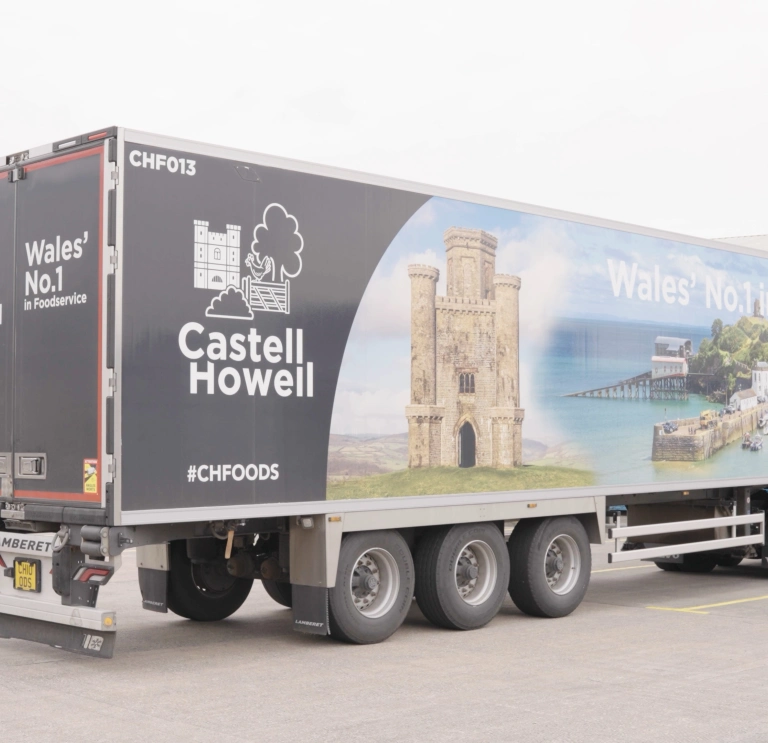
Food wholesaler and manufacturer Castell Howell is using Welsh Government support to better understand emissions across its supply chain while strengthening resilience against the impacts of climate change.
Based in Cross Hands, Carmarthenshire, the business employs almost 1,000 people and operates depots across Wales and in Avonmouth. With significant volumes of fruit and vegetables coming from Spain and Morocco, reducing emissions and safeguarding future supply are key priorities.
Understanding the wider supply chain
As a major supplier to the foodservice sector, Castell Howell recognises that sustainability extends beyond its own operations to the environmental, social and economic impacts of the wider food chain.
The business committed to developing a Carbon Reduction Plan, accessing specialist carbon assessor support through the Welsh Government’s fully funded Carbon Reduction Plan offer. This allowed the business to measure and better understand its emissions, particularly Scope 3, and identify the product categories and areas of its supply chain with the greatest environmental impact.
“The support from Welsh Government to focus on our Scope 3 emissions and identify where the greatest impacts lie has been hugely beneficial,” says Ed Morgan, Environment, Social and Governance Manager at Castell Howell.
The work is already helping to drive measurable change. Castell Howell’s March 2024 Carbon Reduction Plan reported a 7.29% reduction in emissions per weight of product sold compared with its 2020/21 baseline. The company also estimates that using return journeys to transport yoghurt from Llaeth y Llan avoided around 6,197 kg of CO₂ emissions.
The findings have given senior management clearer insight into emissions hotspots and opportunities for improvement across the supply chain. Looking ahead, sustainability is expected to play an increasingly important role in supplier accreditation and procurement decisions.
I would encourage Welsh food and drink businesses to take advantage of the support and training available through Welsh Government. By working together across the supply chain, we can help secure a more resilient and consistent food supply for years to come.
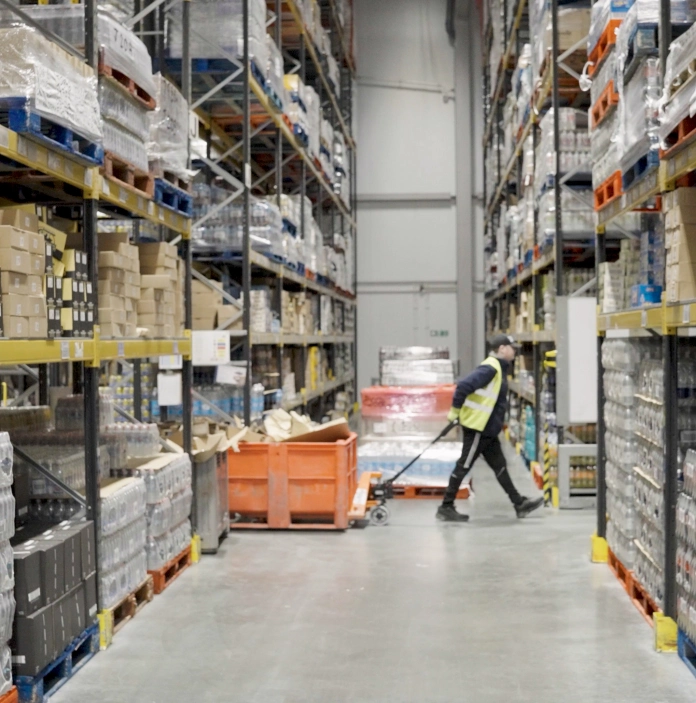
Building resilience for the future
Alongside reducing emissions, Castell Howell has accessed fully funded support through the Welsh Government’s Climate Adaptation and Resilience Training (CART) programme. The first step was completing a climate adaptation readiness assessment to identify key climate-related risks and challenges. The findings were then used to tailor a bespoke 1-2-1 workshop with the senior leadership team around the business’s specific challenges, exploring these risks and how greater resilience could be built into future business planning.
A key focus for Castell Howell has been understanding how climate change could affect important sourcing regions, particularly Spain and Morocco, which supply a significant proportion of its fruit and vegetables.
For Castell Howell, adaptation and carbon reduction are closely linked.
“The Carbon Reduction Plan and the CART programme are complementary and work hand in hand. One helps us reduce our contribution to climate change, while the other helps us prepare for the impacts already being experienced across the supply chain”, added Ed.
As weather patterns become increasingly unpredictable, resilience has become a growing business priority. The company is already seeing the effects of climate change within its supply network and is taking steps to better understand and manage future risks.
A whole-chain approach
Castell Howell's commitment to a more sustainable food system also extends to supporting local supply chains. Through the Growing Healthy Futures initiative, delivered in partnership with Welsh Government and other organisations, the business is helping to increase the amount of Welsh-grown produce supplied to schools.
The initiative builds on the success of the Welsh Veg in Schools project, which grew from supplying one tonne of organic vegetables to Cardiff schools in 2022 to more than 25 tonnes delivered across 10 local authorities by 2025.
Ed believes collaboration across the food and drink sector will be essential in building a more resilient and sustainable future, “I would encourage Welsh food and drink businesses to take advantage of the support and training available through Welsh Government. By working together across the supply chain, we can help secure a more resilient and consistent food supply for years to come.”
For Castell Howell, sustainability is not just about reducing emissions. It's about creating a stronger, more resilient food supply chain, using data and collaboration to inform decisions, support suppliers and prepare for future challenges.
Get expert guidance and support by emailing SustainableFD@gov.wales.